Plug-in hybrid SUVs sit in the most confusing part of the New Zealand car market. They’re heavier than petrol, more complex than a regular hybrid, and they pay Road User Charges that most buyers never see coming. But when they fit your driving pattern, they’re the cheapest SUVs to run on the road.
I’ve spent the last few years tracking how PHEVs actually perform on Kiwi roads — not the brochure numbers, but real EV range after a Wellington winter, real running costs once RUC is in the maths, and which ones hold their value when you go to sell.
Here’s what I’d actually buy in NZ in 2026, what I’d skip, and how to work out whether a PHEV makes sense for your driving before you spend $60k+.
What Counts as a Plug-in Hybrid SUV in 2026?
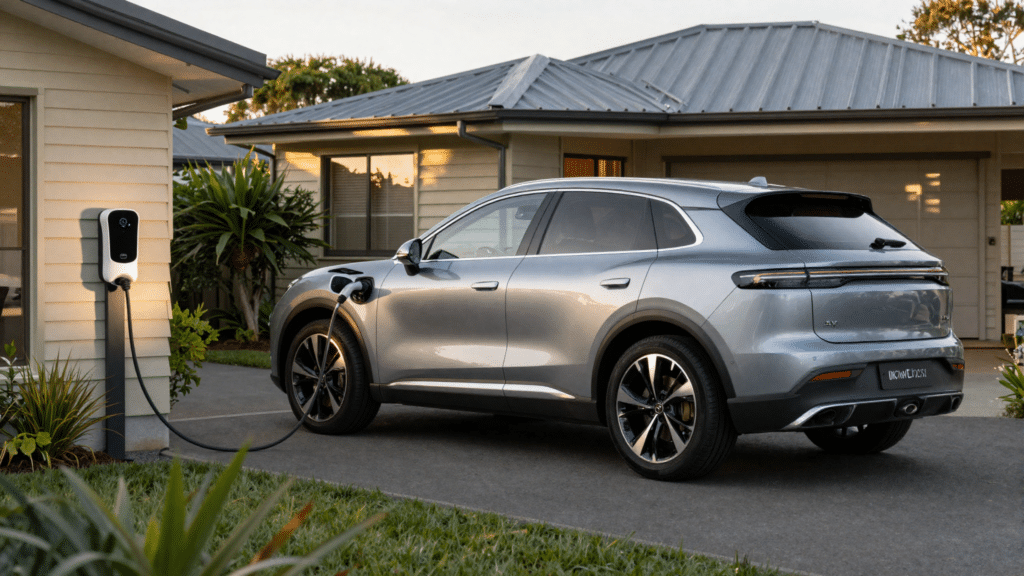
A plug-in hybrid SUV runs a petrol engine plus a battery big enough to drive 40–90 km on electricity alone. You charge it overnight at home, drive most short trips on cheap electrons, and the petrol engine takes over for long trips. Best of both worlds — if you actually plug it in.
This is different from a regular hybrid like a RAV4 Hybrid or a Corolla Hybrid. Those have a tiny battery that the engine charges as you drive — you never plug them in, and they can only run on electric power for a few hundred metres at low speed.
The PHEV bet is simple: if your daily driving is under 60 km, you can do almost all of it on electricity, and the petrol tank is only there for the occasional road trip. If you don’t plug it in, you’re lugging a heavy battery around for nothing.
PHEV SUV Real-World EV Range in NZ — Compared
The biggest gap between brochure and reality with PHEVs is EV range. Claimed numbers assume mild weather, gentle driving, and tyres at perfect pressure. NZ owners I’ve spoken to report 15–25% less than the WLTP figure in winter, especially in the South Island.
Below is what owners are actually getting on NZ roads in 2026, averaged across summer and winter driving:
Real-World EV-Only Range (km)
Based on NZ owner reports and KMH analysis — averaged across summer/winter, 2026.
The BYD Sealion 6 DM-i tops the chart — and that’s before you factor in price. It delivers more usable EV range than SUVs costing twice as much. The Outlander PHEV is close behind, with the longest track record of any plug-in SUV in NZ.
The premium German PHEVs come last on range. That’s not an accident — they prioritise petrol-side performance and the battery is sized to qualify for fleet tax breaks overseas, not to maximise daily EV driving.
The PHEV SUVs Worth Buying in NZ Right Now
I’ve scored each pick on three things that matter: real-world EV range, total running cost (including RUC, fuel, and servicing), and parts/dealer support in NZ. A great PHEV with no dealer within 200 km of you isn’t a great PHEV.
PHEV SUV Scorecards — My Top Picks
My Pick by Use Case
| Your Situation | My Pick | Why |
|---|---|---|
| First-time PHEV buyer, average family | Mitsubishi Outlander PHEV | Proven tech, every workshop knows it, strong resale |
| Best value, urban dweller | BYD Sealion 6 DM-i | Class-leading EV range under $55k |
| 7 seats, big family | Kia Sorento PHEV | Only true 3-row PHEV with strong NZ dealer network |
| You actually like driving | Mazda CX-60 PHEV | Properly engaging, premium without German prices |
| Toyota loyalist, can wait 6 months | Toyota RAV4 PHEV | Best long-term reliability bet, if you can find one at MSRP |
| Luxury feel, lower km driver | Volvo XC60 Recharge | Cabin and safety tech are class-leading, but expensive to run |
Will a PHEV Actually Save You Money?
This is the question every buyer wants answered and very few brochures will. A PHEV only saves money if your driving pattern lets you do most kilometres on electricity — and once Road User Charges are factored in, the maths is tighter than people think.
Use the calculator below to see what a PHEV SUV actually costs you per year vs a comparable regular hybrid, based on your driving and charging habits.
Annual Running Cost: PHEV SUV vs Regular Hybrid SUV
The pattern in NZ is clear: if you charge most nights and most of your driving is short, a PHEV saves real money over its life. If you only plug in occasionally, a Toyota RAV4 Hybrid or Corolla Cross Hybrid will cost less per year and still get you 5–6 L/100km without thinking about it.
Don’t forget the upfront premium. A PHEV typically costs $8,000–$15,000 more than its non-plug-in twin. At a typical $1,000–$1,500 a year saving on fuel, that’s a 6–10 year payback before you’ve broken even on purchase price.
Why the Outlander PHEV Still Dominates the NZ Market
Mitsubishi sold the first plug-in SUV in NZ back in 2014. They’ve had a decade to refine the system, and it shows in the 2022-onwards model. It’s the only PHEV SUV I’d call a no-brainer for a first-time buyer.
Three reasons it still wins:
- Every workshop in NZ can service it. The drivetrain has been around long enough that even small-town mechanics have seen one. Try saying that about a Volvo Recharge in Gore.
- Used examples are everywhere. A 2020 Outlander PHEV with reasonable battery health goes for $30,000–$38,000. That’s the genuine value play in NZ — new PHEV tech without the new PHEV price.
- The resale is brutally good. Outlander PHEV depreciation is among the slowest in the SUV segment, which means low total cost of ownership even if you flip it every 4–5 years.
The new model also fixed the biggest complaint about the old one: that it felt like an afterthought. The 2022+ Outlander is a properly modern SUV first, and a PHEV second — the cabin, the ride, and the tech are all competitive with petrol rivals.
PHEV vs Regular Hybrid vs Full EV: Which Should You Pick?
Almost every PHEV buyer should at least consider the two alternatives. Here’s when each one wins.
| Drivetrain | Wins When | Skip If |
|---|---|---|
| Plug-in hybrid (PHEV) | You have home charging, mostly short trips, occasional long trips, no public charging access | You can't charge at home, or you do mostly long-distance driving |
| Regular hybrid | No home charging, mixed driving patterns, want zero hassle and lowest upfront price | You want to drive on electricity for the school run |
| Full EV | Mostly city/suburban driving, home charging, and access to fast chargers for occasional road trips | You regularly do 400+ km legs without a charging plan, or live somewhere with patchy charging |
If you’re still unsure, see Best Hybrid Cars NZ 2026 for the regular-hybrid alternative, or Best Electric Cars NZ 2026 for the full-EV option.
What Drives PHEV SUV Longevity in NZ Conditions
PHEVs ask more of an owner than a regular petrol or hybrid. Three things separate a PHEV that’ll do 200,000 km without drama from one that becomes a problem at 80,000 km:
- Charging habits. Slow AC charging at home (7 kW or less) is gentler on the battery than relying on DC fast charging. PHEVs that get fast-charged every week age faster than those topped up overnight at home.
- Actually using the petrol engine occasionally. PHEVs left in EV-only mode for months grow stale fuel and seized brake calipers. Run the engine for at least 30 minutes once a month, ideally on a longer drive.
- Servicing the conventional bits. The petrol engine, the gearbox, and the brakes still need standard servicing. People assume “hybrid” means “no maintenance” and skip oil changes — that’s when expensive failures start.
The Outlander, RAV4, and Sealion 6 all have proven track records on these fronts in NZ. The newer or premium models have less data — they may end up just as durable, but I’d want to see another 3–4 years of real-world ownership before recommending them for long holds.
PHEV SUVs I’d Avoid for NZ Ownership in 2026
I won’t name every problem PHEV individually, but if you’re shopping in NZ in 2026, here are the categories I’d be very cautious about:
- Pre-2019 used Outlander PHEVs. First-generation batteries have lost meaningful range. A 2015 Outlander PHEV might give you 25–30 km of EV driving instead of the original 50 km. The car still works fine — but you’re paying for tech that’s no longer functional.
- Grey-import European PHEVs. A BMW X5 xDrive45e from a used UK dealer might look like a bargain, but parts, software updates, and even basic servicing can become nightmares in NZ. Stick to officially imported models.
- Mazda CX-60 PHEV (early production). The 2023 launch had real teething problems with the 8-speed gearbox. The 2025+ models are markedly better — but I’d avoid the very first cars unless they’ve had the factory updates applied.
- Any PHEV bought without a home charging plan. The biggest reason PHEV owners report poor running costs isn’t the car — it’s that they never installed a wallbox and gave up plugging in after a month. If you can’t commit to overnight charging, don’t buy a PHEV at all.
- Sub-50 km claimed EV range PHEVs. Anything claiming under 50 km WLTP range will deliver around 30–40 km in NZ winter conditions. That’s barely enough for a school run plus errand. Below this threshold, the PHEV premium just isn’t worth it — get a regular hybrid instead.
None of these are bad cars in isolation — but if you’re paying a $10k premium for plug-in tech, you want a PHEV that actually delivers on its promise for the full life of the car. The smarter play is almost always to pick from the scorecard list above and skip the corner cases.