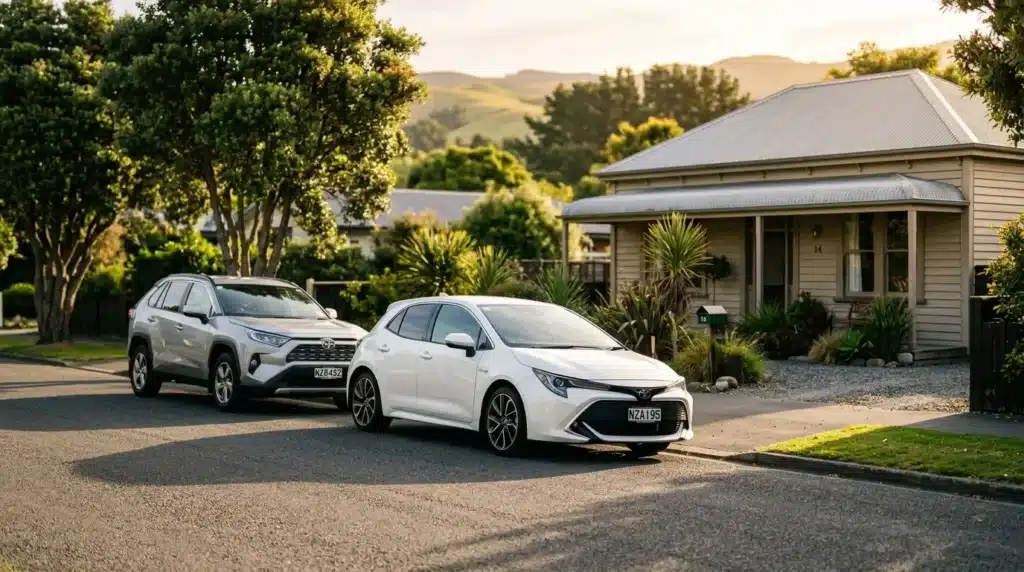
Reliability is the one thing every Kiwi driver says they want — and the one thing the brochure never tells you. I’ve spent years tracking which cars actually last on New Zealand roads, which ones drain your bank account at the workshop, and which “premium” brands cost more in repairs than the car is worth after five years.
This guide cuts through the marketing noise. I’ll show you the most reliable cars in NZ for 2026, what makes them dependable, what they really cost to own, and which models I’d avoid if reliability is your top priority.
If you want a car that just works — for school runs, long road trips, or daily commutes — this is the list to buy from.
What Makes a Car “Reliable” in NZ Conditions?
Reliability isn’t just about the engine running. In New Zealand, a truly reliable car needs to handle:
- Variable terrain — from Auckland motorway crawls to gravel roads in the Wairarapa
- Salt air corrosion — coastal living eats poorly built cars alive
- Temperature swings — sub-zero Central Otago mornings to 35°C Hawke’s Bay summers
- Ethanol-blended fuels and a mix of fuel quality
- Long service intervals — many Kiwis push 15,000+ km between services
A car that scores well in JD Power surveys in Texas can fall apart here. The brands that succeed in NZ are the ones built for harsh, variable conditions — not just well-engineered, but easy to source parts for and cheap to fix when something does go wrong.
I judge reliability across four real-world measures: average repair frequency, parts availability in NZ, time-to-fix at a workshop, and total ownership cost over 5 years. The list below is built on that framework.
Most Reliable Car Brands in NZ for 2026
Before naming individual models, brand reputation matters because it tells you about the parts supply chain, the dealer network, and the engineering culture. Below is how the major brands stack up based on NZ owner surveys, AA breakdown data, and parts availability across the country.
NZ Brand Reliability Score (out of 100)
Based on KMH analysis of NZ owner reports, AA roadside data, and parts pricing — 2026.
The standouts: Toyota and Lexus dominate NZ reliability, with Mazda, Honda, and Suzuki right behind. The Korean brands (Hyundai/Kia) have closed the gap dramatically and now offer 5-year warranties with strong parts support.
European prestige brands score lower not because they’re poorly built — but because parts are expensive, specialist workshops are limited outside main centres, and out-of-warranty repairs can cost more than the car’s resale value.
Top 7 Most Reliable Cars You Can Buy in NZ 2026
These are my picks across price points and body styles. Every car on this list has a strong NZ owner base, easy parts access, and proven longevity past 200,000 km.
Reliability Scorecards — Top 7 Picks
Quick Buyer’s Summary by Use Case
| Your Need | My Pick | Why |
|---|---|---|
| Daily commuter | Toyota Corolla Hybrid | Lowest running cost, bullet-proof drivetrain |
| Family SUV | Toyota RAV4 Hybrid | Spacious, hybrid efficiency, 96/100 reliability |
| Premium feel | Lexus NX Hybrid | Toyota reliability with luxury fit and finish |
| Tradie / ute | Toyota Hilux | NZ’s most reliable workhorse, parts everywhere |
| First car / budget | Suzuki Swift | Cheap to buy, cheap to run, rarely breaks |
| Driver’s choice | Mazda CX-5 | More engaging to drive, still very reliable |
| Petrol-only family car | Honda CR-V | Roomy, well-built, strong long-term reputation |
How Much Does Reliability Actually Save You?
Reliability isn’t an abstract concept — it’s real money. A car that needs $4,000 of out-of-warranty repairs over five years isn’t cheaper than one that costs $2,000 more upfront.
Use the calculator below to see what a more reliable car saves you in repairs, breakdowns, and downtime over 5 years of ownership.
5-Year Reliability Cost Calculator
The pattern is clear: a top-tier reliability brand can save $3,000–$6,000 over 5 years compared to a less reliable equivalent — even before you factor in resale value, where reliable cars also hold more.
Resale matters too. A 5-year-old Toyota Corolla typically retains 65–70% of its value. A 5-year-old European hatchback of similar size might retain 40–45%. That gap is often bigger than the original price difference.
Used vs New: Where to Buy Reliable Cars in NZ
You don’t have to buy new to get reliability. In fact, a 3–5 year old Toyota or Mazda is often the smartest financial move in NZ.
Here’s how the choices stack up:
| Buying Option | Pros | Cons | Best For |
|---|---|---|---|
| New from dealer | Full warranty, latest safety tech, capped service costs | Hits ~25% depreciation in year one | Buyers who keep cars 8+ years |
| NZ-new used (3–5 yrs) | Service history, no import surprises, balance of factory warranty | Pay a premium over imports | Buyers who want low risk |
| Japanese import | Cheaper, often lower km, quality build | Need to verify spec, RUC and emissions checks | Budget-conscious, mechanically aware buyers |
| Auction (BidorBuy/Turners) | Lowest prices | No warranty, mileage may not be verified | Experienced buyers only |
My take: For NZ buyers, a 3-year-old Toyota or Mazda from a reputable dealer with full service history is the reliability sweet spot. You skip the worst depreciation and still get years of warranty coverage on most components.
If you go the import route, always pay for an AA pre-purchase inspection ($150–$200) and verify the import paperwork. The savings only matter if the car’s actually as advertised.
What Drives a Reliable Car to Last 300,000+ km in NZ
Three things separate cars that last from cars that don’t, regardless of badge:
- Drivetrain simplicity — Naturally aspirated petrols and proven hybrid systems (Toyota’s THS) outlast turbocharged engines and CVTs across the board. Fewer parts equals fewer failure points.
- Owner servicing discipline — A poorly serviced Toyota will die before a meticulously serviced VW. Stick to the service schedule, use quality oil, and don’t skip the small jobs.
- NZ-friendly parts and labour costs — A car that needs a $3,000 turbo replacement at 120,000 km isn’t reliable in any meaningful sense. Look for cars where common repair parts are under $500 and labour is under 4 hours.
That last point is why I rank Toyota Hilux and Corolla so highly. When something does go wrong (eventually), every workshop in NZ can fix it, and parts are on the shelf — not on a 6-week ship from Germany.
Models I’d Avoid If Reliability Is Your Top Priority
I won’t name every problem car on the market, but if you’re prioritising reliability above everything else, here are the categories I’d think twice about for NZ ownership in 2026:
- First-generation Chinese EVs (pre-2023) — battery management and software were still maturing. The newer BYD and Leapmotor models are much improved, but early imports can be problematic.
- European turbocharged petrols out of warranty — VW EA888, Audi 2.0T, and Mini engines have well-documented timing chain and oil consumption issues. Repairs run $3,000–$8,000.
- DCT/dual-clutch gearboxes pre-2018 — Ford PowerShift, early VW DSGs. Common, expensive failures.
- Air-suspension SUVs out of warranty — Range Rover, older Touaregs. A single failed strut is $2,000–$4,000.
- Diesel utes with DPF systems used only for short trips — short-trip use clogs the diesel particulate filter and triggers expensive repairs.
None of these cars are bad in isolation. But if you want a vehicle that will simply work for 10 years with predictable costs, they carry more risk than the alternatives I’ve recommended above.
The smarter play is almost always to choose a proven, mainstream reliable car — and spend the money you save on better tyres, regular servicing, and a solid roadside assistance plan.