
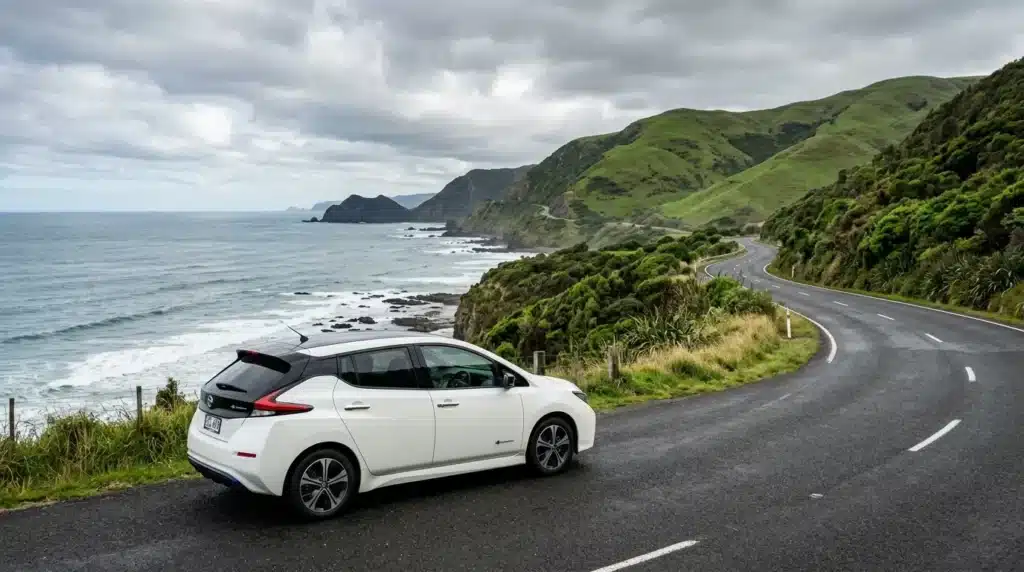
The Nissan Leaf is the car that opened EV ownership to everyday Kiwi drivers. Before the BYD Dolphins and MG4s arrived, the Leaf was how most New Zealanders got their first taste of electric driving — and it’s still the most affordable entry point into EV ownership in NZ.
I’ve seen hundreds of these cars on NZ roads, and I’ve put genuine thought into who should buy one, which generation to target, and what the real running picture looks like in 2026. This isn’t a manufacturer brochure — it’s what you actually need to know before handing over your money.
If you’re considering a used Nissan Leaf, the range of experiences is enormous. A well-spec’d 2020 40kWh Leaf is a genuinely capable daily driver. A tired 2013 24kWh Leaf with degraded battery might only deliver 80km on a full charge. Knowing which you’re buying is the difference between a great purchase and an expensive mistake.
Nissan Leaf Generations in NZ: Which Version Are You Looking At?
Understanding the two Leaf generations is essential before you buy. They look similar, but they’re very different cars.
Generation 1 (2011–2017)
- Battery options: 24kWh (most common) or 30kWh (late 2016–2017)
- Real-world range: 80–130km depending on battery condition
- Charging: 3.3kW or 6.6kW AC on-board charger; CHAdeMO DC fast charge
- Key issue: passive air cooling means significant battery degradation over time
Generation 2 (2018–present)
- Battery options: 40kWh (standard) or 62kWh (Leaf e+)
- Real-world range: 200–250km (40kWh) or 280–340km (62kWh)
- Charging: 6.6kW AC; CHAdeMO DC fast charge; e+ also supports CCS2
- Key improvement: better thermal management, significantly less degradation
- Added feature: ProPilot semi-autonomous driving (higher trims)
Most Leafs entering NZ are right-hand-drive Japanese imports, which is ideal. They were driven in a similar climate and generally well-maintained. NZ’s Waka Kotahi entry certification process means all used imports must pass safety checks before registration.
My take: If you’re buying a Gen 1, treat it as a second car or short-commute vehicle. If you need a primary car, go Gen 2 40kWh minimum.
What Does a Used Nissan Leaf Actually Cost in NZ? (2026 Prices)
Prices have settled significantly from the peak years. Here’s a realistic guide to what you’ll pay in 2026:
| Generation | Battery | Typical Year | NZ Price Range | What You Get |
|---|---|---|---|---|
| Gen 1 | 24kWh | 2012–2015 | $5,000–$10,000 | Budget commuter, degraded range |
| Gen 1 | 30kWh | 2016–2017 | $9,000–$14,000 | Better range, still air-cooled |
| Gen 2 | 40kWh | 2018–2020 | $16,000–$24,000 | Capable daily driver |
| Gen 2 | 40kWh | 2021–2023 | $22,000–$30,000 | Near-new condition |
| Gen 2 e+ | 62kWh | 2019–2023 | $28,000–$42,000 | Long-range EV, good for touring |
Add $500–$1,500 for compliance and WOF if buying through a dealer that hasn’t yet certified the car. Private imports from Japan direct can be cheaper but require you to manage compliance yourself — factor in shipping (~$1,800–$2,500 from Japan), compliance (~$600–$900), and registration.
Where to buy: Trade Me Motors has the largest NZ inventory. Look at dealers specialising in Japanese EV imports — they’ll have done compliance and often offer a short warranty. Avoid auction-only cars where you can’t verify battery health before purchase.
Real-World Range on NZ Roads: What the Numbers Actually Mean
Nissan quotes range figures that don’t translate directly to NZ driving. Here’s what to expect in practice:
Gen 2 40kWh (most buyers’ choice):
- Summer, flat suburban driving: 210–230km per charge
- Winter, heated cabin, motorway: 160–190km per charge
- NZ hill driving (Wellington, Dunedin): subtract 15–20% vs flat routes
Gen 1 24kWh (with good battery — 10+ bars):
- Summer, suburban: 110–130km
- Winter: 80–100km
- With degraded battery (8 bars): 70–90km summer, 55–70km winter
Gen 1 30kWh:
- Summer: 140–160km
- Winter: 110–130km
For most NZ commuters, the average daily drive is under 60km. A Gen 1 with reasonable battery health is adequate for that — but you’ll be charging nightly and watching the range gauge carefully. A Gen 2 40kWh gives you proper buffer and removes the daily anxiety.
The CHAdeMO fast charge network in NZ is functional but thinner than CCS2. ChargeNet, BP Pulse, and Vector PowerPod have CHAdeMO-capable stations at main centres and key highways. For road trips, plan your stops — the Leaf isn’t a one-charge-and-go car on longer NZ routes.
The Battery Degradation Problem: How to Check Before You Buy
This is the single most important thing to understand about Gen 1 Leafs. The 24kWh and 30kWh batteries are air-cooled — no liquid thermal management. In hot climates (Arizona, Japan’s summers), they degrade fast. NZ’s mild climate is better, but degradation still happens.
The 12-bar capacity gauge: The Leaf’s dashboard shows battery health as bars out of 12. Lose one bar = roughly 15% capacity gone. An 8-bar car has lost about 33% of its original capacity.
Use LeafSpy: The $15 LeafSpy Pro app (Android/iOS) + a $20 OBD2 Bluetooth adapter gives you exact State of Health (SOH) as a percentage. Ask the seller if you can run LeafSpy before buying. If they refuse, walk away.
What to look for:
- 90%+ SOH: excellent condition, buy with confidence
- 80–89%: good, appropriate for short-commute use
- 70–79%: acceptable only if price reflects it
- Below 70%: avoid unless you’re planning a battery replacement
Battery replacement cost: A third-party 40kWh upgrade battery from a specialist like EV Power or Injectoclean NZ runs $5,000–$8,000 installed. This can be worth it on a cheap Gen 1 shell, but factor it into your offer price.
Gen 2 40kWh and e+ batteries degrade far more slowly — you’re unlikely to see this as a serious issue on 2018–2022 cars in NZ conditions.
Nissan Leaf Running Cost Calculator vs Petrol
RUC calculated at NZ$76 per 1,000km (light EV rate). Adjust electricity and petrol prices to match your actual costs.
Charging the Nissan Leaf in NZ: Home, Public and the CHAdeMO Reality
Home charging is where the Leaf makes the most sense economically. A standard 10A household socket will add roughly 10–12km of range per hour — fine if you plug in overnight. A dedicated 16A circuit (Type 2 socket) pushes that to 30–40km/hour, which means a full overnight charge from near-empty.
Home charging costs: At 30c/kWh, a full 40kWh charge costs ~$12. Do that 4× a week and you’re at ~$48/month. Far cheaper than filling a petrol tank.
Public charging in NZ:
- ChargeNet has the widest NZ network; many sites have CHAdeMO
- BP Pulse (formerly Meridian/Z stations) — CHAdeMO at select sites
- Countdown/Foodstuffs EV parks — typically slower AC charging only
- Vector PowerPod — Auckland-focused, mix of CHAdeMO and CCS2
The CHAdeMO standard is worth understanding. Most new EVs use CCS2, and the charging network is expanding CCS2 faster than CHAdeMO. The Gen 2 Leaf 40kWh is locked to CHAdeMO for DC fast charging, which means fewer rapid charger options as time goes on. The 62kWh e+ supports both, giving you more flexibility.
For a daily urban commuter that charges at home, this isn’t a big deal. For someone who regularly drives Auckland to Hamilton or Christchurch to Dunedin, the charging network limitations matter more — and you’d be better placed with a CCS2-capable car.
Nissan Leaf vs BYD Dolphin vs MG4: Which Used EV Should You Buy in NZ?
Used EV Comparison: Nissan Leaf vs BYD Dolphin vs MG4
The Leaf’s biggest advantage over the BYD Dolphin and MG4 is price. A 2019 Gen 2 40kWh Leaf at $18,000 is half the cost of a new Dolphin. The trade-off is range, CHAdeMO charging, and interior modernity.
If you can stretch to $38,000+, the Dolphin or MG4 are objectively better cars. If your budget is under $25,000 and you need a reliable EV today, the Gen 2 Leaf 40kWh is the sensible choice.
One thing the Leaf still does well: it has one of the best-documented ownership communities in NZ. EV forums, specialist mechanics, and a large pool of spare parts mean you’re not alone if something goes wrong.
What the Nissan Leaf Actually Costs to Own in NZ Each Year
Here’s an honest annual cost breakdown for a 2019 Gen 2 Leaf 40kWh doing 15,000km/year:
| Cost Item | Annual Amount | Notes |
|---|---|---|
| Electricity (charging) | ~$720 | 16 kWh/100km × 15,000km × $0.30/kWh |
| Road User Charges (RUC) | $1,140 | NZ$76 per 1,000km light EV rate |
| WOF | ~$60 | Annual, independent garage |
| Registration | ~$110 | NZTA standard |
| Insurance | $700–$1,400 | Comprehensive, age-dependent |
| Servicing | $150–$300 | Minimal for EVs; brakes, tyres, cabin filter |
| Total | ~$2,880–$3,730 | Excluding depreciation |
Compare that to a comparable petrol car (say, a 2019 Toyota Corolla) doing the same distance:
- Fuel: ~$3,000 (8L/100km @ $2.50/L)
- Service: $400–$600 (more complex drivetrain)
- Total: ~$4,000–$5,000 per year on running costs alone
The Leaf saves roughly $1,000–$2,000 per year in running costs versus a petrol equivalent. Over 5 years, that’s $5,000–$10,000 — real money that offsets the purchase price.